What Does Low Cortisol Aim Mean in Valorant and Can You Actually Learn It
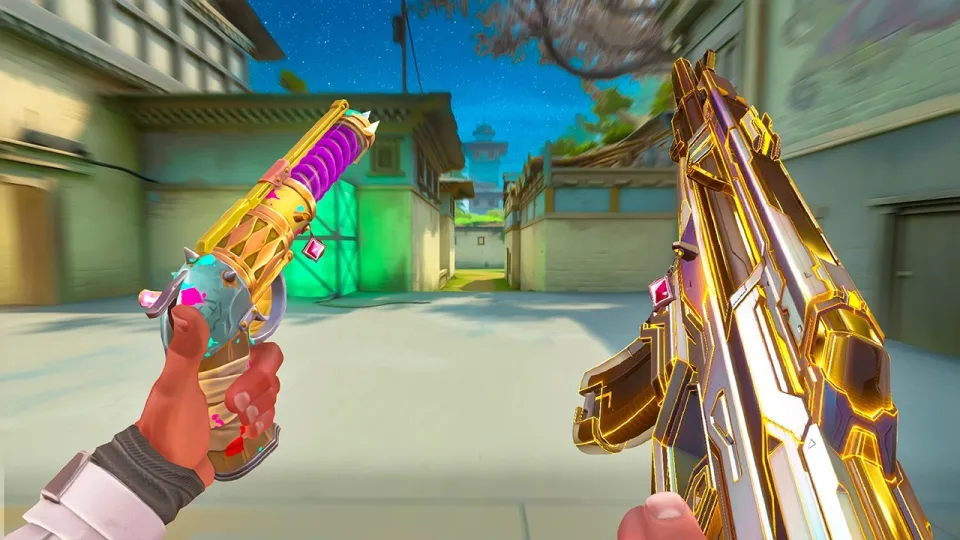
Video: low cortisol aim..
Want articles like this for your own video to promote it on YouTube and Google? Order them through the Telegram bot @sat_sit_bot. The bot writes and publishes the articles itself (with your YouTube video embedded) on popular topical websites (no ads). Your first 50 articles are free.
· based on the channel Rawzu
Low cortisol aim in Valorant is a style of aiming built on calm, repeatable crosshair placement rather than adrenaline-driven flicks, and it is learnable: it comes from a low sensitivity, a consistent setup and a routine that keeps your hands relaxed. The label comes from a Rawzu Phoenix clip titled "low cortisol aim..", where the aim looks almost boring — which is exactly the point. If you want the same hardware baseline the creator uses, you can optimize your PC for Valorant with Hone before you touch a single in-game slider.
What low cortisol aim actually means in Valorant
Low cortisol aim describes the opposite of panic aiming: the crosshair sits where the enemy will appear, micro-adjustments are small, and the player never drags the mouse across half the pad to save a round. The phrase is internet slang, not a Riot Games term — it borrows the stress hormone's name to describe aim that looks like the player's heart rate never moved. In practice it maps to three things: low sensitivity, pre-aim at head level, and a grip that stays loose even in a 1v3.
The appeal is that this style survives bad days. Flick-heavy aim depends on reflexes that degrade with fatigue; calm aim depends on geometry and habits that stay stable. That is why clips of this kind get comments about movement and smoothness rather than raw speed — viewers notice the crosshair arriving early, not the mouse flying.
Rawzu's exact Valorant settings and gear
The clip's description lists a full setup, and every number in it points toward control rather than speed. Rawzu plays at 400 DPI with 0.625 in-game sensitivity, which works out to 250 eDPI — roughly half of what many duelist players use. Lower eDPI means a wider arm movement for the same turn, which naturally smooths out jittery corrections.
- Sensitivity: 400 DPI / 0.625 (250 eDPI)
- Resolution: 1440x1080 (a stretched 4:3 ratio that widens player models)
- Crosshair: 1-6-2-2 (a small dot-style reticle with tight gap and short lines)
- Mouse: Logitech G Pro X Superlight 2
- Mousepad: Artisan Zero Soft
- Monitor: Zowie XL2566K at 360Hz
Two details matter more than the rest. The Artisan Zero Soft is a control-oriented pad, so a low sensitivity gets extra stopping power without feeling sticky. The 360Hz monitor reduces the visual delay between a target appearing and your hand reacting, which makes calm holding angles far less punishing. The 1440x1080 stretch is a personal preference, but it does make heads wider on screen and rewards players who hold lines instead of swinging wide.
How Phoenix's kit rewards a calm approach
Phoenix is an offensive duelist who specializes in hunting enemies down while crippling their ability to fire back, and his kit fits a composed player better than a frantic one. Curveball blinds enemies even when they are tucked behind corners, so you can flash without exposing yourself, then walk a pre-aimed line into the site. Blaze creates a wall that blocks vision and deals damage, letting Phoenix cross open ground that would otherwise be a death sentence.
Hot Hands gives him a molly that doubles as self-healing when he stands in his own fire, and Run It Back lets him push an angle, trade information and respawn at the marker if he dies. Run It Back is where low-sensitivity players gain the most: you can take a fight you would normally avoid, because the cost of losing it is a cooldown, not a round. The catch is that a calm player must still commit — Phoenix's utility is wasted on someone who flashes and then hesitates.
Why viewers keep asking about the movement, not the aim
Across the comments on the clip, the recurring reaction is surprise at how the player gets places first and how smooth the movement looks, with several people joking about the game looking like something other than Valorant. That reaction is a useful clue: in Valorant, calm aim only works when movement is already clean. Counter-strafing — tapping the opposite key to stop instantly before shooting — is what makes a low sensitivity viable, because you are not fighting your own momentum when you fire.
The practical order of improvement is therefore movement first, aim second:
- Practice stopping dead before every shot in the range, using A-D taps rather than mouse corrections.
- Set your sensitivity so a full 180-degree turn takes one comfortable arm sweep, not a wrist flick.
- Hold angles at head level with the crosshair already on the corner, and let the enemy walk into it.
- Only then add flick drills, because flicks are the exception, not the foundation.
Common questions about calm aim and low sensitivity
Most doubts around this style come down to whether a slow setup can survive aggressive duelist play. The honest answer is that low sensitivity costs you almost nothing in Valorant, because the game's time-to-kill is short and most fights are decided before the first bullet. What it does cost is wide swings — if you are caught mid-map with your crosshair facing the wrong way, you will lose that fight. Pre-aim and map awareness are what buy back that weakness.
A second recurring doubt is whether peripherals matter. They do, but at the margins: a control pad and a high-refresh monitor make consistency easier, while a 60Hz screen and a worn-out cloth pad will fight you. The bigger variable is the mouse grip — a relaxed claw or palm grip keeps the hand steady over a long session, which is the entire premise of the style. Finally, resolution and crosshair are personal; copying 1440x1080 and 1-6-2-2 is a reasonable starting point, but give any change at least a week before judging it.
Useful links from the video
- Optimize your PC for Valorant with Hone — the creator's partner link for performance tuning
- Rawzu's original music on Spotify: https://open.spotify.com/artist/6DbATPR1PTNMx7U918bg1Q
- Rawzu's Discord community: https://discord.gg/axnFwyvxp3
The takeaway
Low cortisol aim is not a secret technique; it is the visible result of a low sensitivity, clean counter-strafing and a Phoenix kit used with patience. Rawzu's clip works as a demonstration because the settings in the description — 400 DPI at 0.625, 1440x1080, crosshair 1-6-2-2, a Superlight 2 on an Artisan Zero Soft, and a 360Hz Zowie — all push in the same direction: fewer variables, more repetition. Copy the numbers, then spend your time on stopping before you shoot, and the calm look follows on its own. If frame drops are part of what makes your aim feel frantic, start with Hone's Valorant optimization and remove the stutter before you rebuild your muscle memory. Thanks to the Rawzu channel for the original footage and the full settings breakdown that made this analysis possible.
Key takeaways
- Rawzu runs 400 DPI at 0.625 sensitivity, a very low effective eDPI of 250
- Resolution 1440x1080 with crosshair 1-6-2-2 and a Zowie XL2566K at 360Hz
- Mouse: Logitech G Pro X Superlight 2 on an Artisan Zero Soft pad
- Phoenix kit (Blaze, Curveball, Hot Hands, Run It Back) rewards calm entry timing
- "Low cortisol aim" is a meme label for composed, repeatable crosshair placement
Source: low cortisol aim.. · Markdown version
Questions & answers
Is 250 eDPI too low for Valorant?
250 eDPI (400 DPI at 0.625) is low but well within the range used by high-ranked players. It requires roughly a 40cm arm sweep for a 180-degree turn on a typical control pad, which is comfortable for most desks. If you run out of mousepad space, raise the in-game value slightly rather than switching to a wrist-only grip.
Does a calm aim style work on aggressive duelists like Phoenix?
Yes, because Phoenix's Curveball and Blaze let you create your own timing instead of reacting to the enemy's. A composed player flashes, pre-aims the common angle and walks into it, while Run It Back covers the risk of a failed entry. The style fails only when the player flashes and then hesitates.
How long does it take to adjust to a much lower sensitivity?
Most players need one to two weeks of regular play before arm-driven movement feels natural, and the first few days will feel sluggish. Spend that time in the range on counter-strafing and head-level holding rather than deathmatch flicks. Changing sensitivity again during that window resets the process.
Do I need a 360Hz monitor and a control mousepad to aim calmly?
No, but they reduce friction. A high-refresh monitor shortens the delay between a target appearing and your reaction, and a control pad like the Artisan Zero Soft helps a low sensitivity stop precisely. A 144Hz screen and a clean, large pad get you most of the way there.